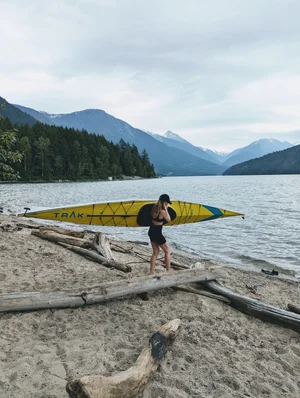
How to start kayaking
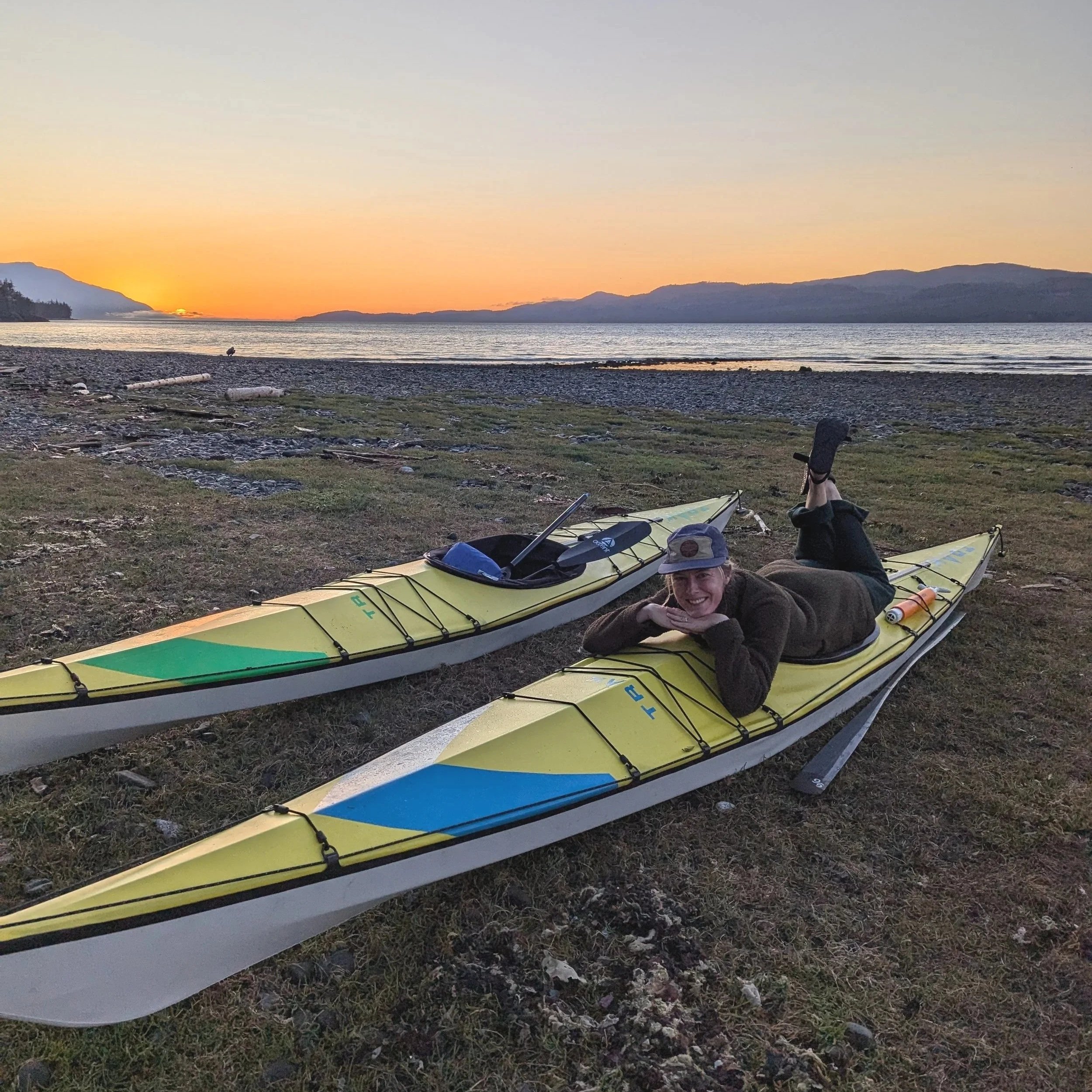
So you want to get into kayaking but don’t know where to start? First of all, hells yes! I am stoked on your behalf that you’re getting on the water.
Welcome to the club!
I bought a kayak and just started kayaking around Vancouver with zero experience. I kept close to shore and only paddled in calm conditions. I had no idea what I was doing and in hindsight, really wish I had taken my first kayaking course earlier as I still struggle to correct my form today.
Six years later and my skills have improved wildly through experience and training. Now I confidently take my kayak on epic adventures all around British Columbia. Kayaking has unlocked a whole new sense of confidence, exploration, and spectacular campsites without all the crowds.
If I can do it, so can you. Let’s get you started.
Disclosure: this post contains affiliate links. If you make a purchase through these links, I may earn a commission at no cost to you. I only link to products I’ve personally tried and love. Affiliate links help cover the costs of hosting my blog.Renting
Renting is the best way to get a feel for kayaking to see if it’s even something you want to do. Most rental companies will not rent to an inexperienced solo kayaker so you’re best to join a day tour and have an experienced guide show you the way.
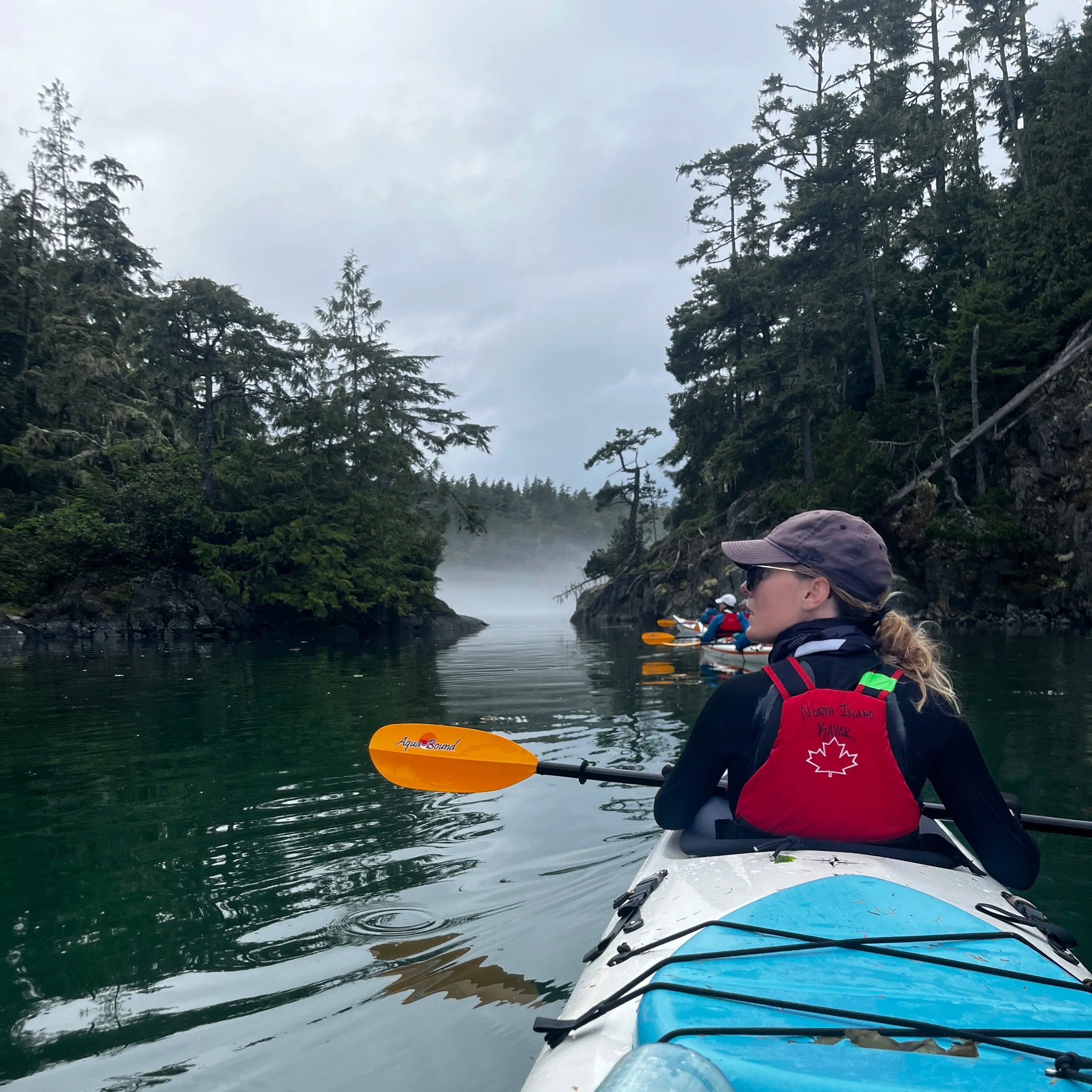
You’ll probably be surprised how sore you get your first time paddling - a two hour or half day will be more than enough to get your feet wet. Or just full send it and take a multi-day tour to really get a taste of kayaking and overnight kayak touring. My favourite tours are with North Island Kayak where you can (ethically) kayak with whales on Vancouver Island, or the TRAK tour in Dominica where you can paddle and snorkel incredible coral reefs in the Caribbean.
Training
We are so lucky in Canada to have Paddle Canada a well-structured training program specific to kayaking, available across the country.
Their Level 1 kayaking course is typically a two-day on the water course covering the basics like your forward stroke and how to re-enter the kayak if you capsize. It is also super fun, empowering, and a great way to meet other kayakers in your area.
As you become more experienced, you can continue taking their courses like the Level 2, a five-day course with a focus on overnight touring.
Side note: I noticed Jericho Kayaking Club structures their courses a bit differently. You definitely want to leave the course with your level 1 which is recognized by kayak rental shops across Canada and will allow you to rent kayaks by yourself. If you’ve been in a kayak before, I’d skip their Canada Paddle Basic and head straight for your Level 1. Personally, I did my Level 1 at Deep Cove Kayak and had a blast!
Buying a kayak
If you’re fortunate enough to live near water, just do it and buy a kayak already! Trust me, you will not regret it! It can be incredibly overwhelming deciding what type of kayak to buy. I’m writing this from the assumption that you’ll want a touring kayak - a sea kayak that will cover long distances and have space to store camping gear. But that’s me being 1000% biased! Ultimately, the best kayak is the one that gets you on the water.
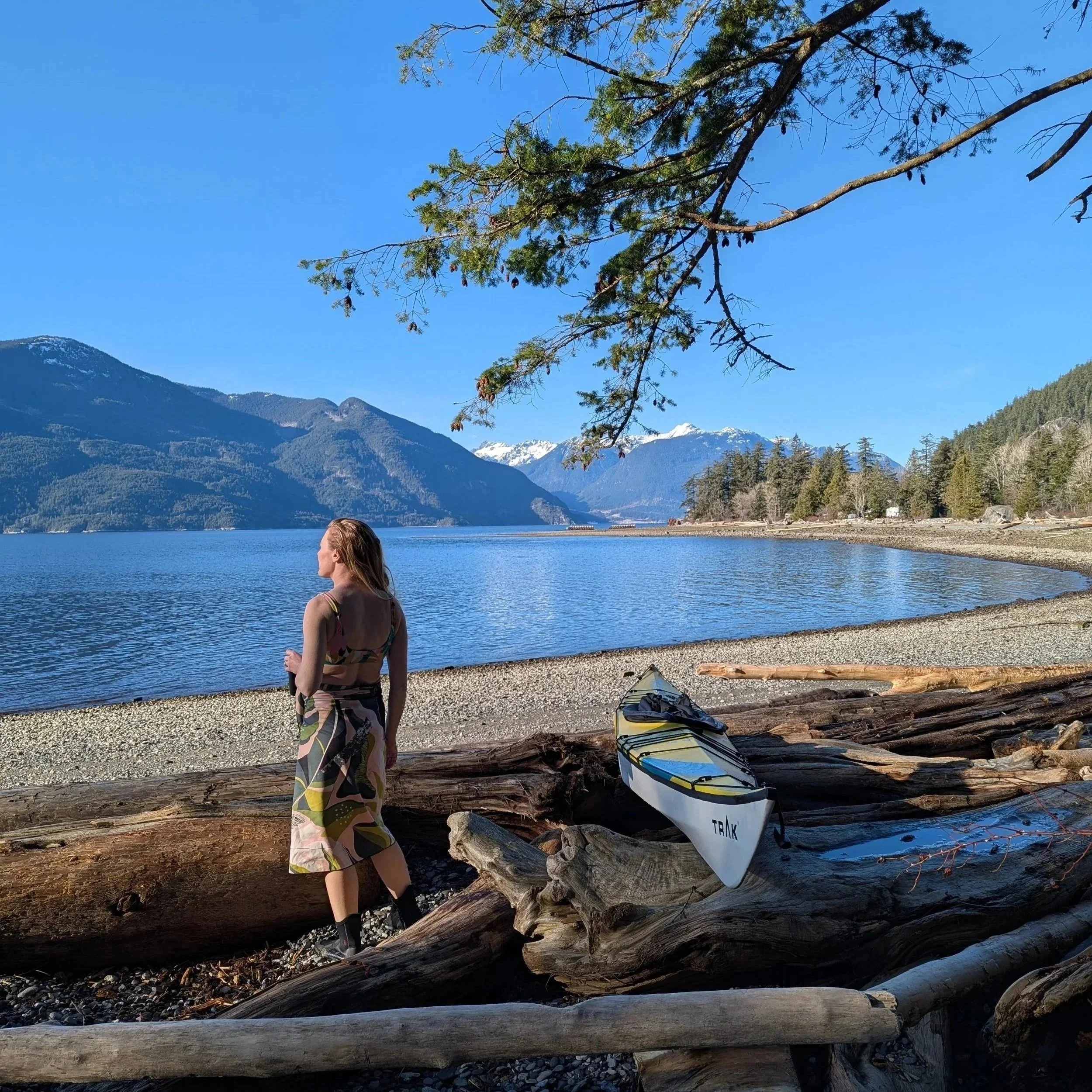
So what makes a sea kayak?
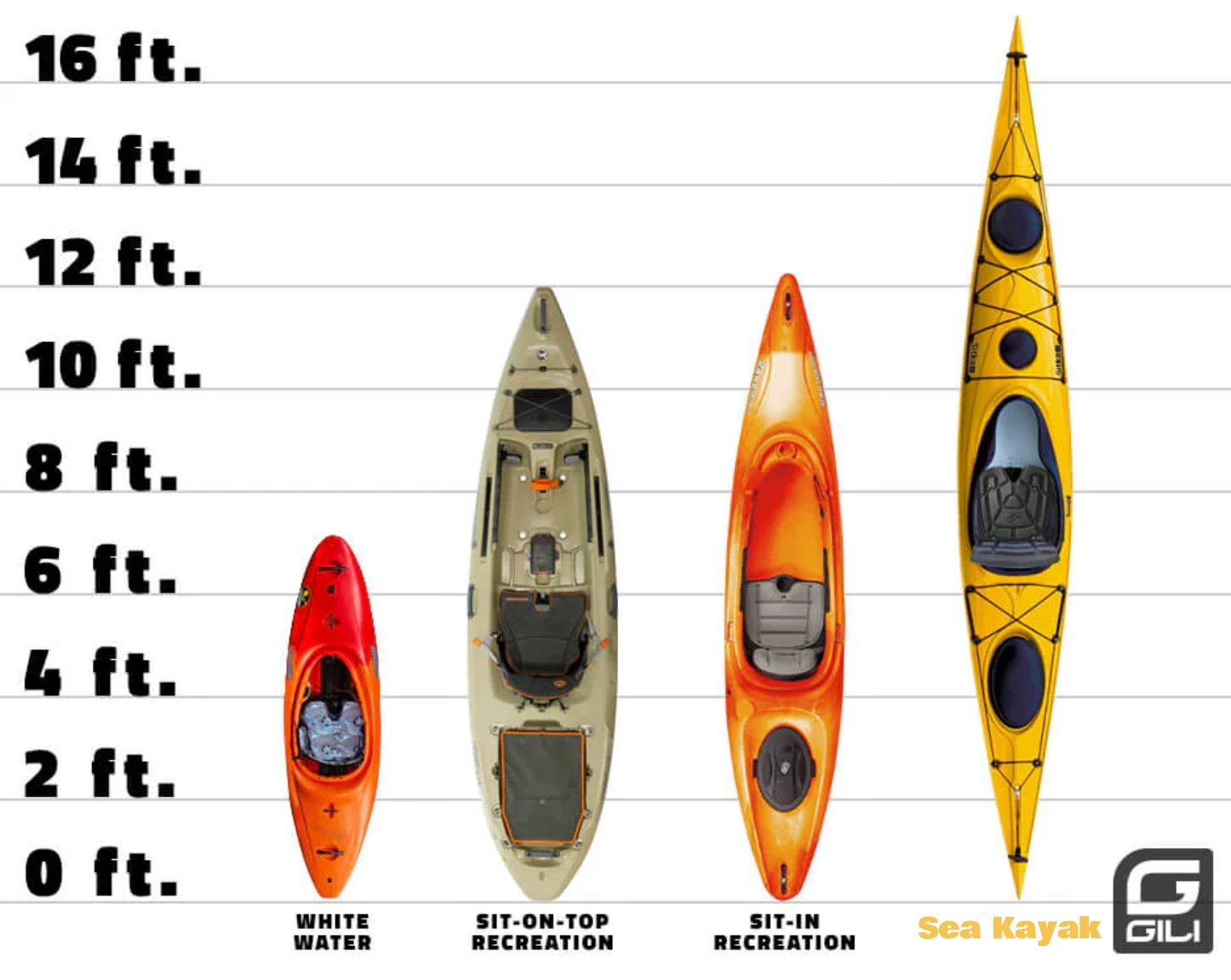
The shape is significantly longer than other types of kayaks, typically 16 feet. The more kayak length in the water, the faster and straighter you’ll go. Compare this to a whitewater kayak that is short and can turn and pivot quickly.
With a sea kayak you’ll sit inside a cockpit, not on top with your legs exposed. This allows for more hip control and also means that re-entering the kayak will take a bit of training, and definitely some practice. But this shouldn’t be a barrier to trying! Practicing re-entry is actually super fun, and you don’t need to learn to roll the kayak to safely go on epic adventures.
What else should you consider when looking for a kayak?
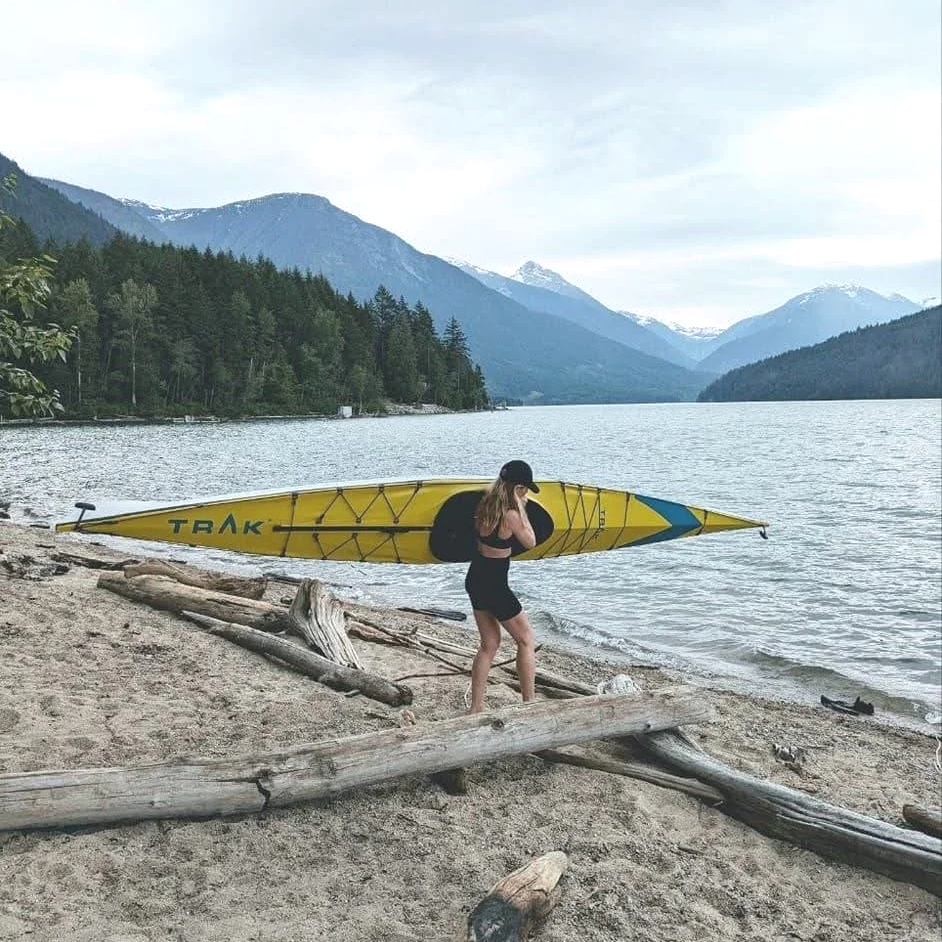
As a fairly petite person, the weight of the kayak is definitely an important factor for me. I want to be able to lift the kayak to the launch point by myself, although some people will use kayak wheels to support them. Whatever your style, thinking about how you’ll move the kayak on land is something to consider.
Skeg vs rudder, or none! The short of it is that skegs and rudders are used to help you paddle straight in winds or current. Some kayaks have neither, and the paddler must rely on paddling technique and edging to maintain a straight course and turn. I wouldn’t make a kayak purchase solely on skeg vs rudder as they perform the same task, but not having one is something to consider for a new paddler. My first kayak did not have a skeg or rudder, and to be honest I didn’t know any better. I probably more quickly had to improve my paddling technique, which may be good for new paddlers or an unwelcome challenge - I think this is personal preference.
Cost and “New vs Used”
Price point is going to have a big influence on your decision. There is nothing wrong with buying a used kayak and “upgrading” in the future. This is really the best way to start so you can decide what aspects are most important to you in your next kayak.
Inspect a used kayak for scratches, cracks, sun damage, and ensure the hatches seal properly. If you’re not sure about a used kayak you can always post on Reddit for advice about the specific listing you’re considering, or ask someone from your local paddling club if they’ll come with you to check it out.
When looking at cost, you’ll notice a big price difference depending on the kayak material. Fiberglass and composite material kayaks are more expensive than polyethylene, but are made of a higher performance material.
You’ll pay a premium for folding or skin-on-frame kayaks, but for a kayak you can store in your apartment or throw on an airplane, that’s the trade off. I do think buying these types of kayaks used is a bit tricky as it’s more challenging to assess the condition of folding/skin-on-frame kayaks unless you had someone with you who has owned this type of kayak before.
Whether new or used, I’m not going to recommend an inflatable kayak. Mainly because I’m not convinced you can reliably re-enter after capsizing given how high it sits on the water (and it’s probably going to suck in the wind).
If you’re buying new, definitely head to your local kayaking outfitter as the staff are awesome. Western Canoe Kayak in Abbotsford is worth the drive if you live in Vancouver, and on the island check out Comox Valley Kayaks in Comox or Ocean River Sports in Victoria (they also do really cool events).
Storage
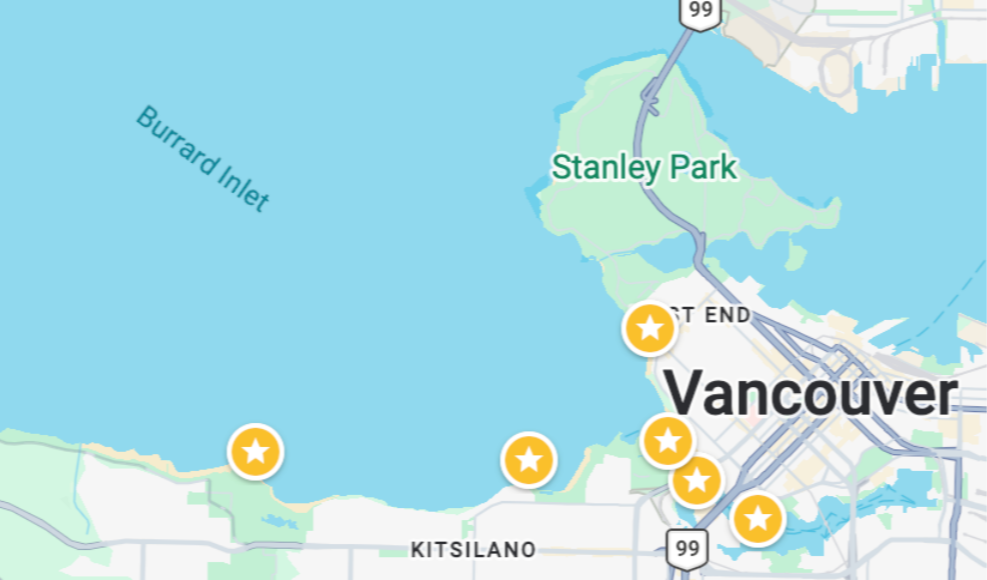
Finding a home for your new kayak can be the most challenging part! As a city dweller, I don’t have the luxury of a garage or backyard to store my kayak in. Thankfully there are several on-the-water storage spots available in Vancouver such as:
Vancouver Water Adventures Granville Island $450
Vancouver Water Adventures English Bay $450
Jericho Sailing Club $221 + $135 membership
Kitsilano Yacht Club $215 + $415 membership
Vancouver Ocean Sports $450 + $215 membership
Spruce Harbour Marina $625
Prices are per year or per season, depending on the club
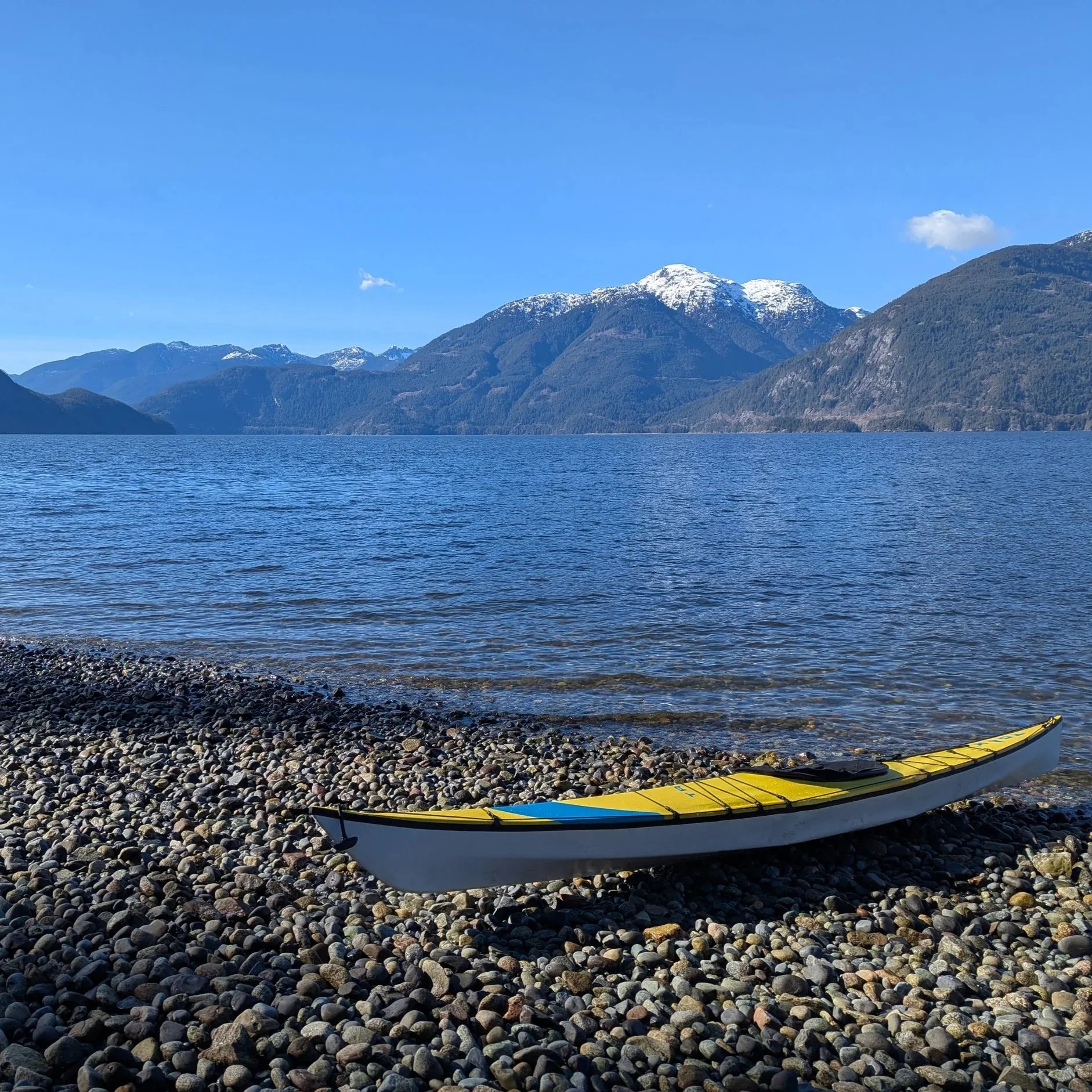
An alternative that avoids the need for storage space entirely are foldable or skin-on-frame kayaks. These pack down to the size of a suitcase and can be stored in your closet or on your balcony. I own both an Oru and a TRAK for this reason. In addition to not paying for kayak storage, I also don’t have to buy a roof rack for my car to take my kayak on adventures.
Accessories
In addition to your kayak, you’re going to need the following “core equipment”:
PFD with a whistle
Buoyant heaving line (tow rope) at least 15m long
Bilge pump
Paddle
Sprayskirt
Sponge
5L dry bag - perfect size for your phone and keys
VHF radio (optional)
Compass (optional, will need if you start to expand your skills)
Wetsuit or Drysuit (depending on when and where you paddle)
Roof rack (optional)
A lot of these are great purchases to make on Facebook Marketplace.
In terms of PFDs, you’ll really want to try these on as they must fit. Especially for women - you want to make sure your boobs aren’t squished and there are many PFDs specifically for women with various designs to accommodate your chest. The short or cropped style of PFD is most comfortable for kayaking. You can wear a more traditional style lifejacket but will likely find it cumbersome, as long as it fits that’s fine. I found the Steveston Marine & Hardware store in Kitsilano had great selection of PFDs I could try on.
I’m not going to pretend to know enough about paddles so I’ll let Comox Valley Kayaks walk you through it with their paddle guide. I will say, the lighter the better and if you plan to travel with your kayak, consider if it breaks into smaller packable pieces.
When buying a sprayskirt, note that you’ll need two measurements to buy the right size - the tunnel size (the fit on your body) and deck size (the size of the kayak coaming aka the raised rim around the cockpit). Deck size is not consistent across kayaks - shout out again to Comox Valley Kayaks who have an awesome sprayskirt sizing guide that can help you figure out what size to buy.
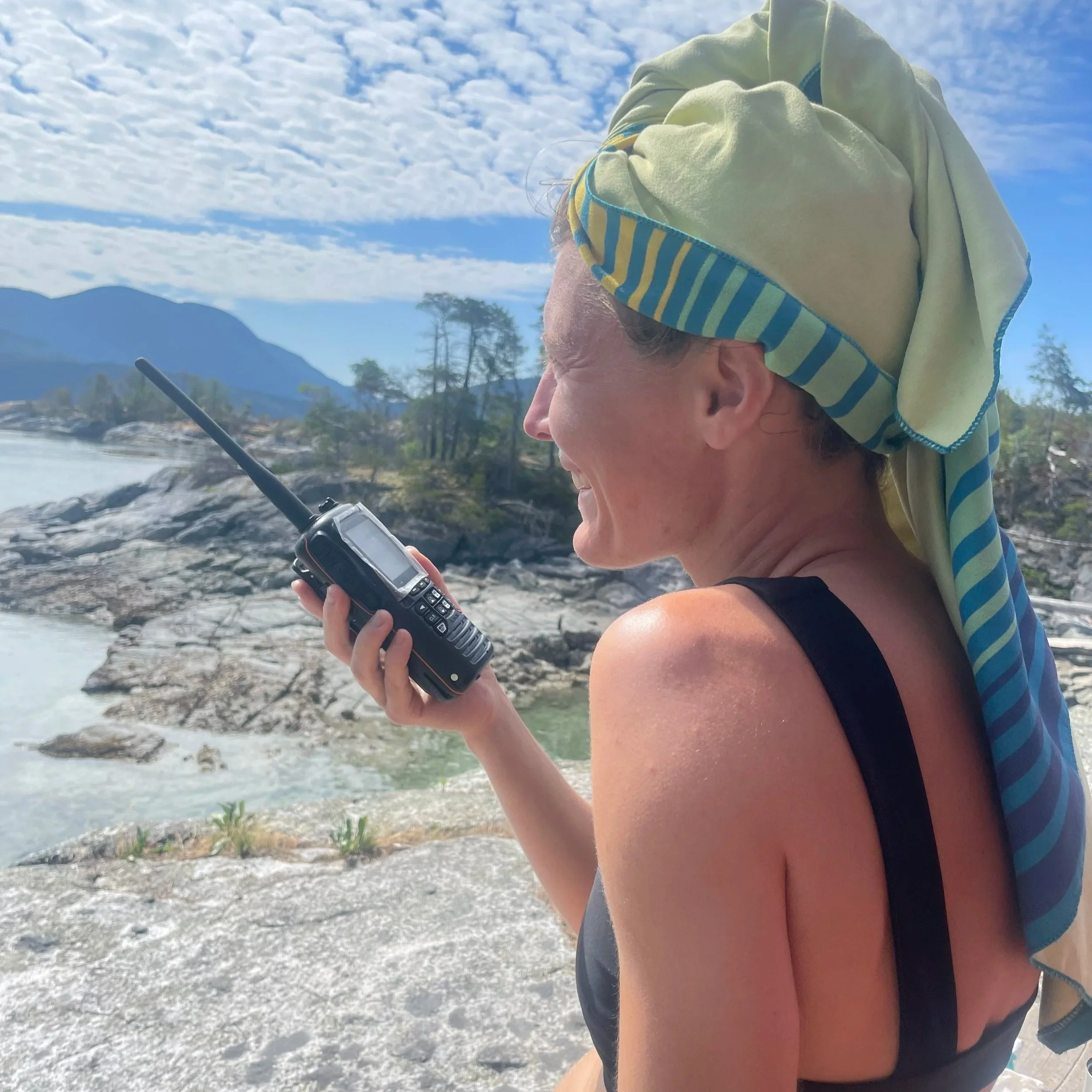
My rant on VHF radios...
I see people using their InReach or other hiking satellite devices as their primary on-the-water safety device and it stresses me out! On the water you’re most likely to be rescued by another nearby boater and you’ll only be able to reach nearby boaters using a VHF radio.
Yes, they are expensive and you require a license (although I doubt if you used one in an emergency you’d be penalized), but they are absolutely worth the investment. I really don’t think you can put a price on your safety.
Similar to my InReach for hiking, I have a one-button distress signal that will immediately send my coordinates to the Coast Guard and alert nearby vessels. The radio is also useful for listening to the marine forecast in places where you don’t have cell service. I highly encourage you to consider buying a VHF once you start to venture further out from shore. I have the Standard Horizon HX890 and am super happy with it.
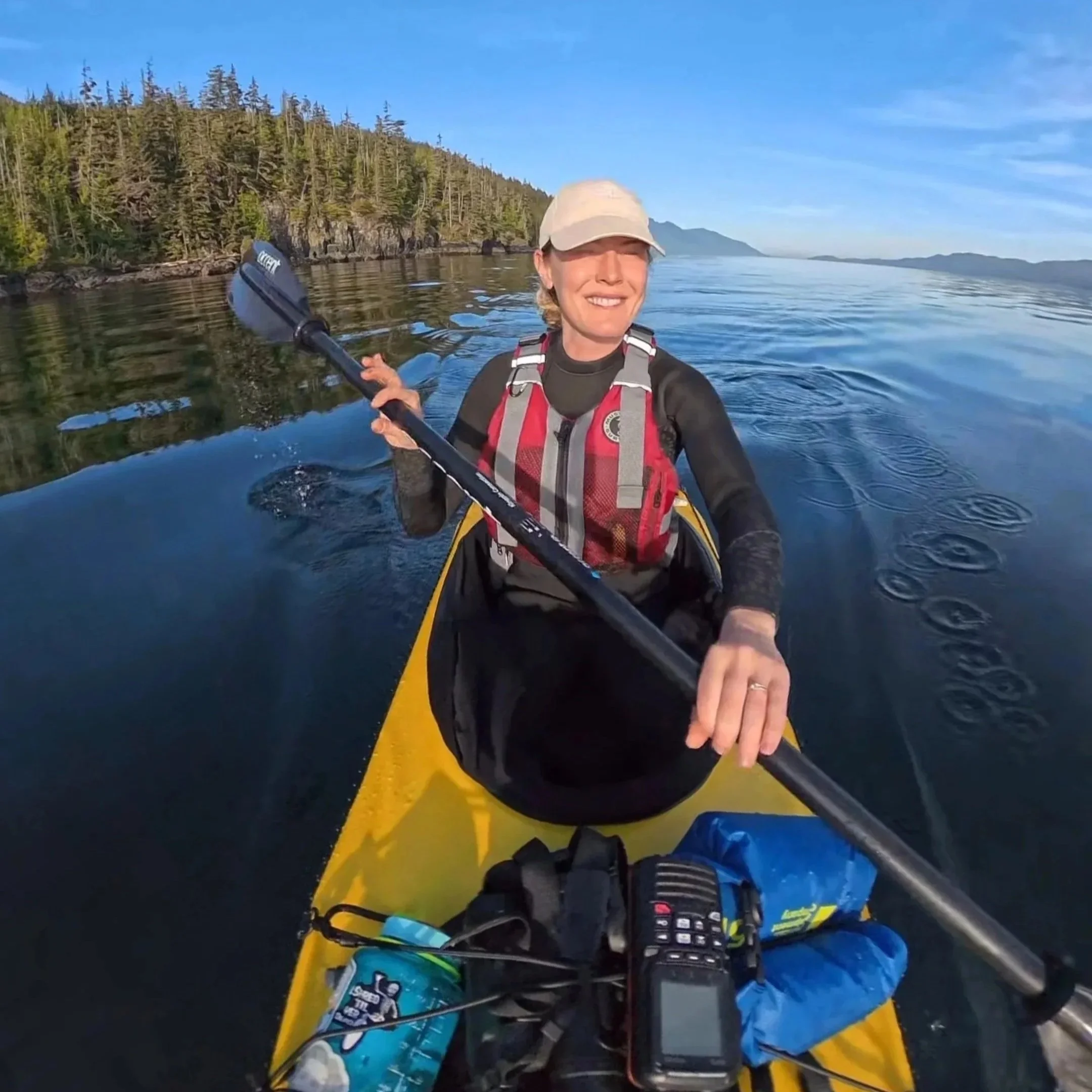
The Wetsuit vs Drysuit debate
I’ll try not to make this another rant but I firmly believe you don’t need a $1,500 drysuit to kayak, even in the winter.
Us kayakers dress for immersion, meaning we dress for the temperature of the water in the event of a capsize. A 5mm wetsuit is perfectly capable of keeping me safe in 5-10 celsius waters.
If drysuits were more affordable, it would be lovely to have one instead of getting in/out of a damp wetsuit, but I really don’t mind paddling in my wetsuit and don’t find it restricting at all.
I’ve found MEC has the most affordable wetsuits and have been very happy with my fully stitched Xcel Axis 5/4mm.
Final Thoughts
You don’t need to wait for others to get started. I would never get out on the water as often as I do if I had to wait around and coordinate with someone else. Join a paddling club, or at the very least, get your Level 1 and get out there on your own. For safety tips on how to kayak by yourself, check out my Adventuring Solo post.
If you want more information on how to get started, Kayak Guru and Gili Sports also have great guides for beginners.
See you on the water!