How to adventure solo
I love solo adventures as they feel especially empowering. Here are my tips on how to safely get started hiking, camping and kayaking on your own.
Frontcountry Camping
Camping, especially frontcountry camping, is a great hobby to start solo. At provincial campsites there are often lots of other campers around and I feel totally safe going by myself as a younger woman (is 36 still young?? LOL).
I’ve heard about some women leaving a pair of men’s hiking boots outside their tent or putting out two camp chairs but honestly I’ve never found the need to do that. I keep to myself at the campground and usually find I’m surrounded by families. There is nothing extra I bring when I’m on my own, other than a good book and a journal.
If I’m venturing to rec sites or less populated sites that are more remote, I do tend to sleep with bearspray and a pocket knife - for both people and wildlife. I also pack small luggage locks with me to lock the tent zipper together from the inside, figuring if someone tried to get in I’d hear the zipper struggling and would have some time to wake up. When I first started solo camping I used the luggage locks but over time as I’ve gotten more comfortable I don’t tend to use them anymore.
Solo camping is so lovely. One or two nights on my own in nature feels like I’ve been away for a week. I turn my phone off, read and enjoy time by myself by the fire.
Backcountry Camping
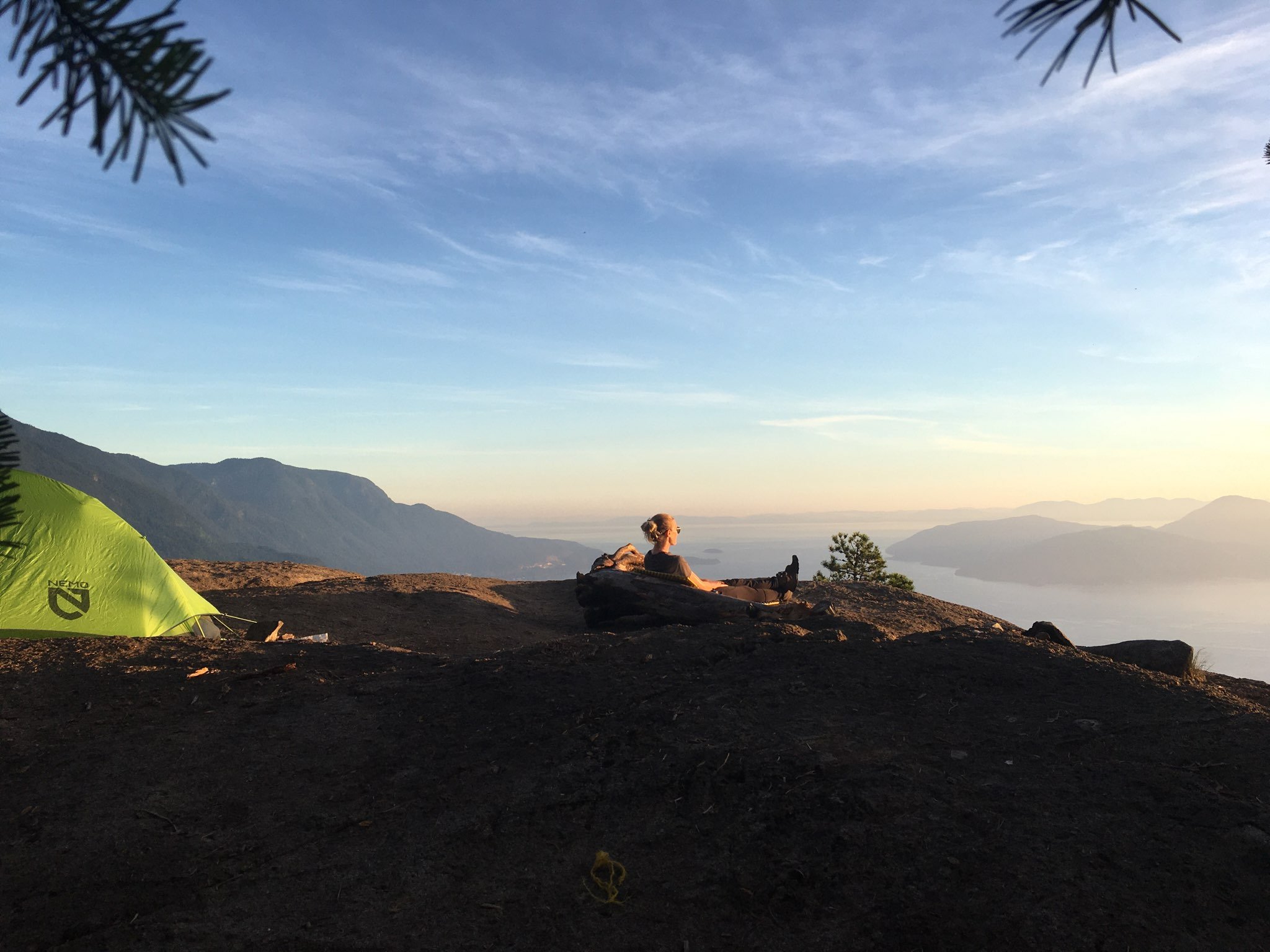
If you’re looking to start backcountry camping on your own, start out by picking a popular site like Elfin or Garibaldi and go on a Saturday night - there will be plenty of other campers and hikers on the trail. For some reason I feel like there is an unspoken solidarity with everyone who has hiked in and feel especially safe camping solo at those sites.
Disclosure: this post contains affiliate links. If you make a purchase through these links, I may earn a commission at no cost to you. I only link to products I’ve personally tried and love. Affiliate links help cover the costs of hosting my blog.Hiking
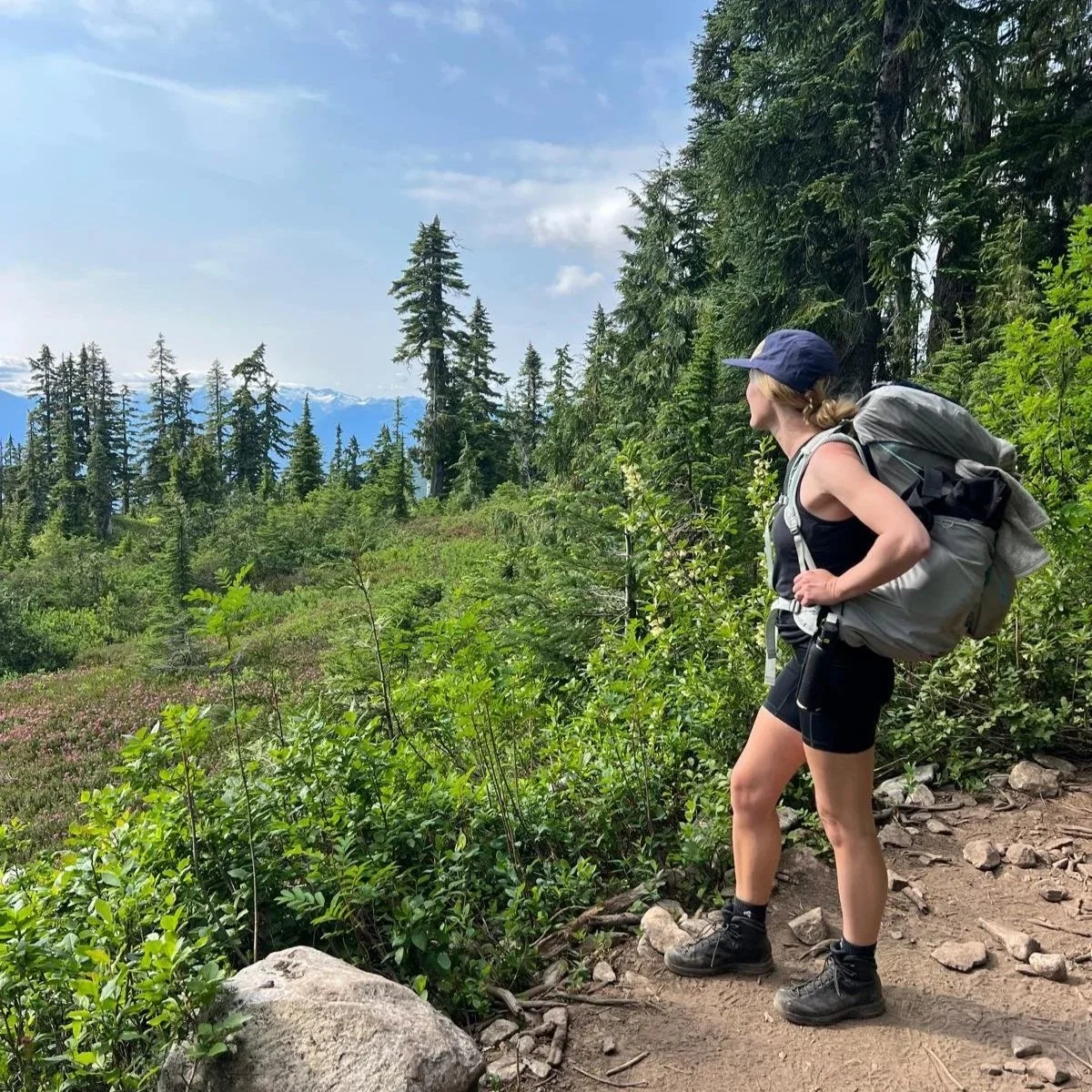
When hiking solo there are a few things I’m going to consider. First, I’m going to pick a trail I’m confident is within my abilities. Then I’ll start planning for the date of my hike - checking the weather at sea level and at the summit, ensuring no avalanche risks or wildfire warnings. I’ll pack the usual 10 essentials but will also pack my InReach Mini, ensuring it is charged and that saved contacts are accurate. Before my trip I assign a friend or family member to act as “mission control” and let them know where I’m going, when I expect to finish, and check-in with them when I start and end the trail. With the InReach I can also text them during the hike and set expectations ahead of time with them as to when to expect to hear from me and what I want them to do if they don’t.
On the trail itself, since I’m not really one to talk or sing outloud to myself, I clap loudly as I hike. I make loud claps every so often, especially before turning any corner or around loud streams of running water. For a while I thought this was overkill until I clapped as I made my way around a corner to see a black bear taking off - I was glad to have made my presence known early. Being familiar with the wildlife you’re likely to encounter and knowing what to do is a given, regardless if you’re solo or not.
InReach Breadcrumb Trail
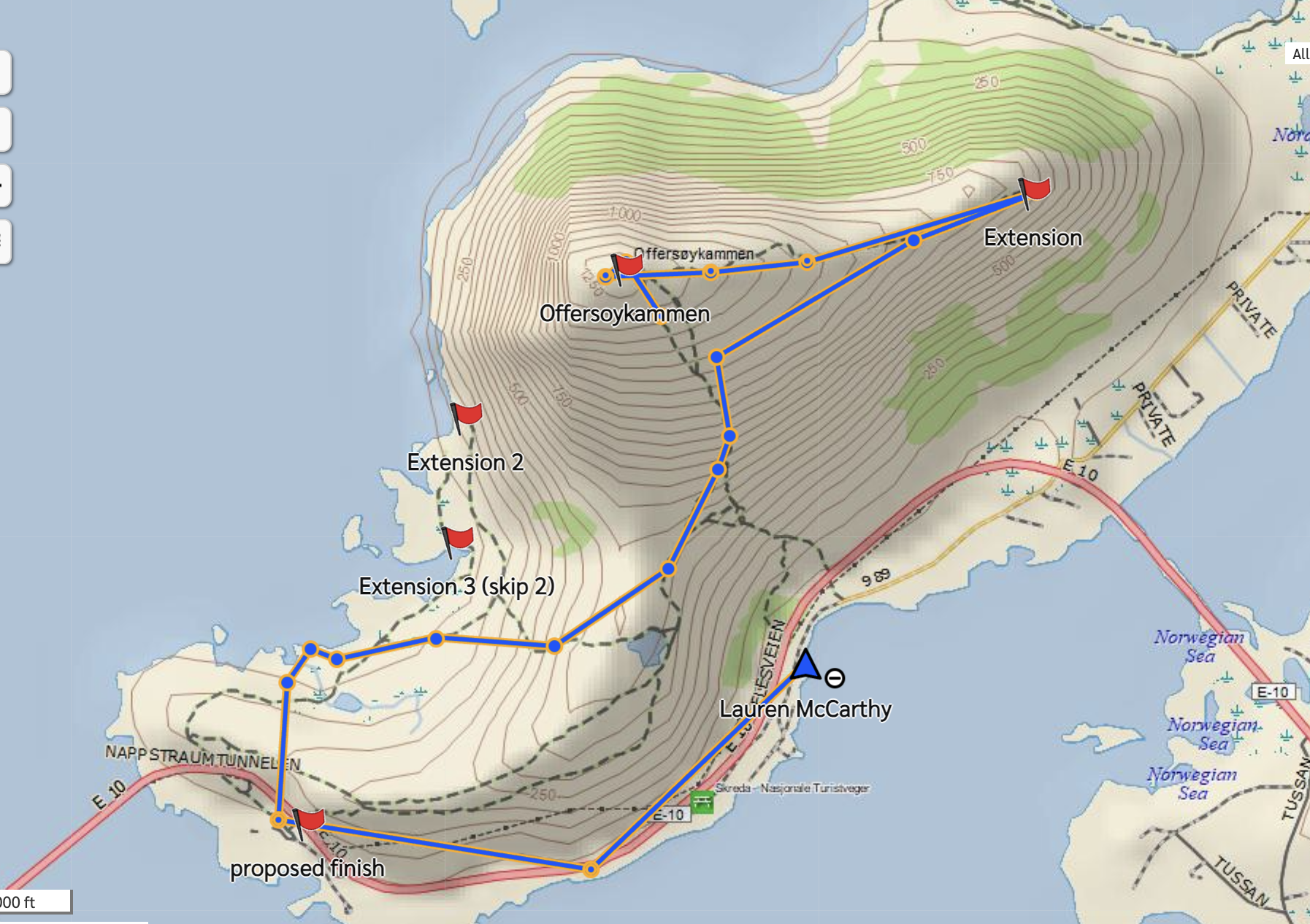
This feature was my main reason for buying the InReach - it tracks your progress in real-time, dropping a series of GPS coordinates as you hike that friends and family can track online. I have mine set to drop a pin every 10 minutes which is a good balance of detailed tracking while also being mindful of battery conservation. I only use this feature when hiking alone as each crumb can cost up to $0.10, depending on the subscription plan you have with Garmin. This gives me confidence that if something happened and I couldn’t hit the SOS button myself, someone easily has my last known coordinates.
Kayaking
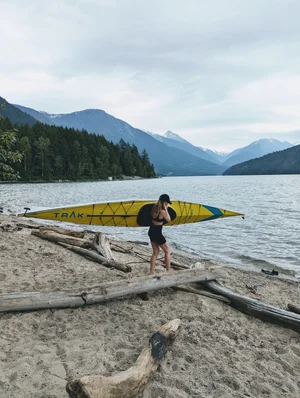
This may be a hot take but I am a big advocate of kayaking alone. I would never get on the water as often as I do if I had to wait around and coordinate with someone else. So many people say to never kayak alone and yes, there are definitely risks but risks can be mitigated and I honestly find so much joy being on the water solo. That being said, you definitely need specific skills and equipment to kayak solo, and it will really depend on your local paddling conditions. I started out paddling in Vancouver with lots of other paddlers and boaters on the water, in calm conditions, and kept close to shore (swimming distance). As my skills and experience grew, I started to venture out further.
I highly recommend the Paddle Canada courses offered across Canada, to ensure you can confidently self-rescue as that is a pre-requisite to getting on the water solo. The Level 1 skills course is incredibly fun and informative.
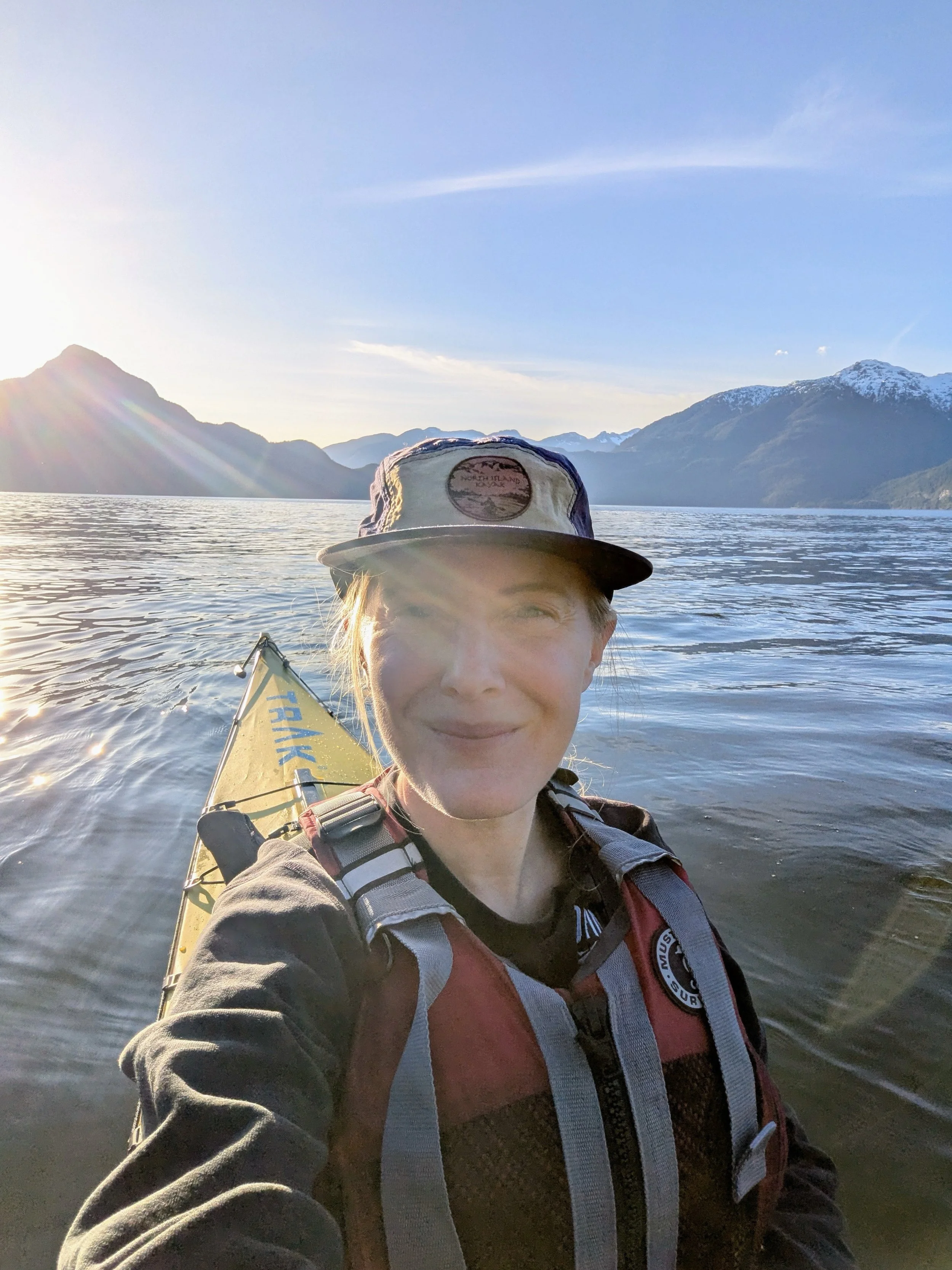
Things I do solo kayaking:
Know how to re-enter my kayak by myself in the conditions I paddle in, and continuously practice. If you can’t re-enter, you should not be on the water solo.
Always wear a PFD with a whistle
Dress for immersion, i.e. dress for the temperature of the water if you were to capsize. I have a winter wetsuit (5/4mm) and a spring/fall wetsuit (2mm) depending on the water temperature of where I’m paddling
Check the wind and wave forecast before every paddle
Plan my paddle based on the forecast and water temperature - i.e. in the winter I’m going to paddle closer to shore
Leave a trip plan with a friend telling them when I’m paddling, where I’m launching from and where I plan to paddle, and text them when I return
Keep a charged cellphone in a dry bag on my kayak
Keep a charged VHF radio on my body when paddling in the winter, rougher conditions, or more isolated locations
Final Thoughts
Ok, so the one thing I haven’t mentioned yet is the number of times you may feel really freaked out - especially the more remote you venture out. But the moments that feel scary are the moments you grow from. That first night alone trying to fall asleep with your heart racing will turn into the morning you wake up feeling so stoked and proud of yourself. So push through it, and know you aren’t the only one feeling that way.
Disclaimer: this information is intended for those already well familiar with camping/hiking/kayaking. If you’re new to these activities practice with friends and build up your skills and experience before you attempt it solo.